
Location : ICRISAT - Ethiopia
Date : 2026-07-28 09:30:00
Organized by International Crops Research Institute for the Semi-Arid Tropics (ICRISAT) through the Dryland Academy, Under the Aegis of CGIAR CapSha Accelerator and Multi-Functional Landscape Science Program.
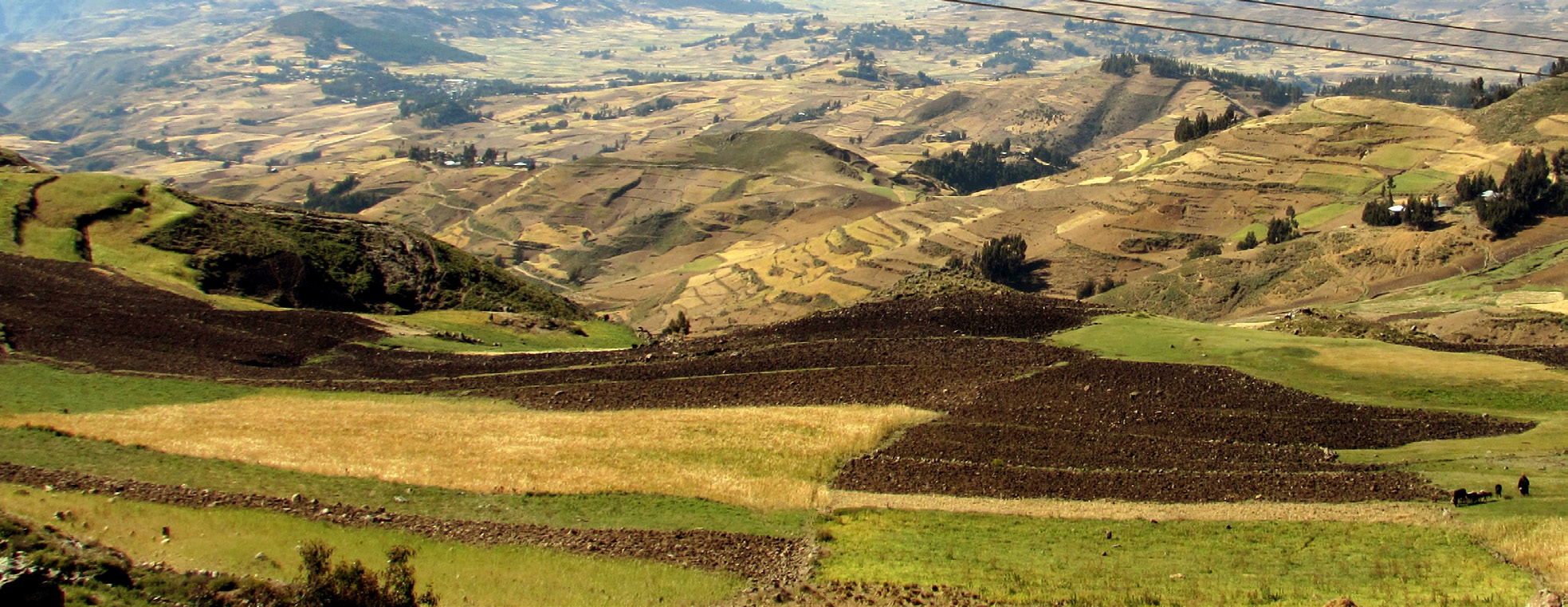
Land degradation is one of the most critical environmental and development challenges facing Ethiopia and many countries across Sub-Saharan Africa. It adversely affects agricultural productivity, food security, water availability, biodiversity, and rural livelihoods. Population growth, changing land-use patterns, deforestation, overgrazing, unsustainable farming practices, and climate variability have accelerated the degradation of natural resources and reduced the capacity of landscapes to provide essential ecosystem services.
Over the past decades, large areas of forests, grasslands, and natural ecosystems have been converted into agricultural lands and settlements to meet growing demands for food and economic development. While these changes have supported agricultural expansion, they have also resulted in soil erosion, nutrient depletion, biodiversity loss, declining groundwater recharge, reduced soil moisture retention, and increased vulnerability to droughts and floods. The impacts are particularly severe in Ethiopia's rainfed and upland regions, where smallholder farmers depend heavily on natural resources for their livelihoods.
Degraded landscapes undermine agricultural productivity and contribute to poverty, food insecurity, malnutrition, and climate vulnerability. Limited access to productive land and water resources often compels rural households to seek alternative livelihoods, resulting in migration, labour shortages, and increased socio-economic pressures on communities. Climate change further exacerbates these challenges through rising temperatures, erratic rainfall, and frequent extreme weather events.
Agroecological and Landscape-Based Natural Resource Management (NRM) provides a holistic and sustainable solution to these interconnected challenges. By integrating soil and water conservation, agroforestry, biodiversity conservation, regenerative agriculture, and climatesmart farming practices, degraded landscapes can be restored into productive and resilient ecosystems. Such interventions improve groundwater recharge, soil moisture retention, vegetation cover, and ecosystem functions while creating opportunities for sustainable agricultural intensification.
Restored and well-managed landscapes enhance crop and livestock productivity, strengthen resilience to climate shocks, generate employment opportunities, and improve household incomes. Furthermore, scaling agroecological and landscape-based approaches supports Ethiopia's efforts toward land degradation neutrality, transformed agrifood systems, and contributes to multiple sustainable development goals. These approaches are increasingly recognized as essential pathways for building resilient agricultural systems and sustainable livelihoods.
The program is designed for researchers, extension professionals, government officials, project managers, policy makers, NGO practitioners, development partners, university faculty, watershed and natural resource management specialists, and private-sector representatives involved in agroecology and nature-based solutions, landscape restoration, climate resilience, and sustainable rural development.
The program is designed for researchers, extension professionals, government officials, project managers, policy makers, NGO practitioners, development partners, university faculty, watershed and natural resource management specialists, and private-sector representatives involved in agroecology and nature-based solutions, landscape restoration, climate resilience, and sustainable rural development.
To reorient a wide range of stakeholders on the landscape resource conservation approach for achieving land degradation neutrality and sustainable crop intensification
To introduce the approach of landscape characterization, designing interventions and developing science-led living landscapes for strengthening rural livelihoods and eco-system services
To discuss science-policy gap in natural resource management and developing strategies for scaling up.
(Themes covered during the course)
Visioning Exercise
Agroecology and nature-based solutions
Landscape characterization, planning and designing of interventions
Soil Health and Land Resource Assessment
Hydrology and Water Resources and Water Budgeted Cropping Systems
Soil and Water Conservation measures
Regenerative Agriculture and Climate-Smart Farming
Agroforestry, Rangelands and Livestock Systems
GIS, Remote Sensing and Digital Technologies
Climate Change, Carbon and Ecosystem Services
Monitoring, Evaluation and Impact Assessment
Community Institutions and Scaling
The training program will combine expert-led lectures, interactive discussions, hands-on exercises, and case studies. Participants will examine practical solutions for addressing land degradation, water scarcity, climate risks, and low agricultural productivity through integrated land-water-crop-tree-livestock management approaches. The program will promote knowledge exchange and peer learning by encouraging participants to share best practices. Special emphasis will be placed on translating scientific evidence into policy and practice, enabling participants to use research findings effectively for planning, decision-making, and scaling sustainable landscape management interventions.
Prospective applicants from Ethiopia only are eligible to apply for the course on the website of using the link below. Deadline to apply for the training course: 8th July 2026
The application can be accessed from the following link: Click here
Dr. Ramesh Singh
Global Research Program Director
Resilient Farming Systems
ICRISAT Focal Point for MFL Science Program
ICRISAT, Hyderabad, India
Email: ramesh.singh@icrisat.org
Dr. Kumaracharyulu Deevi
Senior Scientist
Transforming Agri-food Systems
ICRISAT Focal Point for CapSha Accelerator
ICRISAT, Hyderabad, India
Email: padmaja.ravula@icrisat.org
Dr. Gizaw Desta
Interim Country Representative & Senior Scientist
Landscape Management, Resilient Farming Systems
ICRISAT, Addis Ababa, Ethiopia
Email: gizaw.desta@icrisat.org
Dr. Moses Shyam Davala
Scientist
Transforming Agri-food Systems
ICRISAT, Hyderabad, India
mosesshyam.davala@icrisat.org
Email: mosesshyam.davala@icrisat.org
Dr Padmaja Ravula
Principal Scientist & Cluster Leader
Dryland Academy and Gender and Youth Inclusion
Transforming Agrifood System
International Crops Research Institute for the
Semi-Arid Tropics, Hyderabad, Telangana, India
Email: padmaja.ravula@icrisat.org