

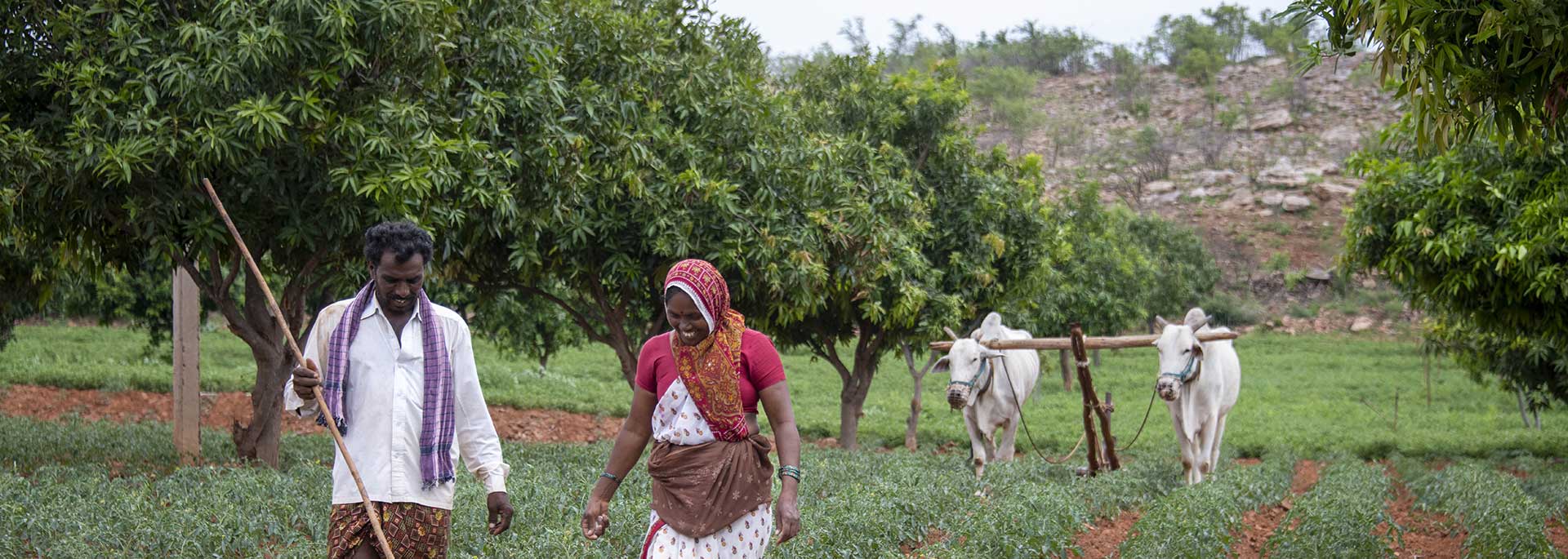
The Regenerative Landscapes (RLS) Theme focuses on restoring, enhancing, and sustainably managing agricultural landscapes to improve productivity, resilience, natural resource stewardship, and livelihoods across the drylands of Asia and Africa. The theme promotes regenerative agriculture by advancing technologies and practices that restore soils, enhance biodiversity, and improve ecosystem services, while strengthening the resilience and productivity of farming systems. By integrating sustainable agricultural practices, climate-resilient innovations, and agronomy-led solutions that support long-term environmental sustainability and improved farmer livelihoods, and partnerships, the theme develops and scales holistic solutions that strengthen soil health, water resources, ecosystems, and farming communities.
Recognizing that resilient agricultural systems depend on healthy landscapes, the theme promotes integrated approaches that combine soil and water conservation, climate-smart agriculture, regenerative farming practices, diversified cropping systems, conservation agriculture, circular resource management, climate-smart technologies. agroforestry, biodiversity enhancement, and sustainable intensification. These approaches help farmers increase productivity, improve soil fertility, enhance water-use efficiency, while reducing environmental impacts and improving the long-term sustainability of natural resources.
A key component of the theme is landscape for resilient agrifood, land and water systems which is ICRISAT’s translational Research-for-Development platform. RLS plays a central role in bridging the gap between scientific innovation and large-scale impact by testing, adapting, and scaling proven solutions through partnerships with governments, development agencies, research institutions, the private sector, and farming communities.
Another key component is regenerative agriculture technologies that enable farmers to build resilient farming systems capable of adapting to climate variability, reducing input costs, and ensuring sustainable intensification. These approaches also contribute to climate change mitigation through carbon sequestration and efficient use of natural resources.
Through innovation platforms and landscape-based learning sites across diverse agroecological regions, the theme supports research and development on climate resilience, land restoration, water security, sustainable livelihoods, nutrition, and ecosystem health. These sites serve as hubs for testing integrated solutions and accelerating their wide-scale adoption.
The theme contributes to global efforts to address climate change, land degradation, biodiversity loss, and food insecurity by promoting empirical approaches that regenerate natural resources while supporting economic opportunities for rural communities.
Key Areas of Focus:
Regenerative agriculture and sustainable land management
Landscape restoration and ecosystem resilience
Soil health assessment (chemical, physical and biological), improvement and soil fertility management
Precision nutrient management
Diffuse Reflectance Spectroscopy (DRS) for large-scale soil health assessment
Conservation agriculture and resource-use efficiency
Water conservation, watershed management, and water-use efficiency
Water budget-based cropping system design
State-of-the-art instrumentation for monitoring weather, climate and soil moisture
Climate-smart, Nature-positive, and Climate-resilient agricultural technologies and practices
Agroforestry and integrated land-use systems
Cropping system diversification and sustainable intensification
Biodiversity conservation and ecosystem services
Green House Gas (GHG) measurement in different cropping systems
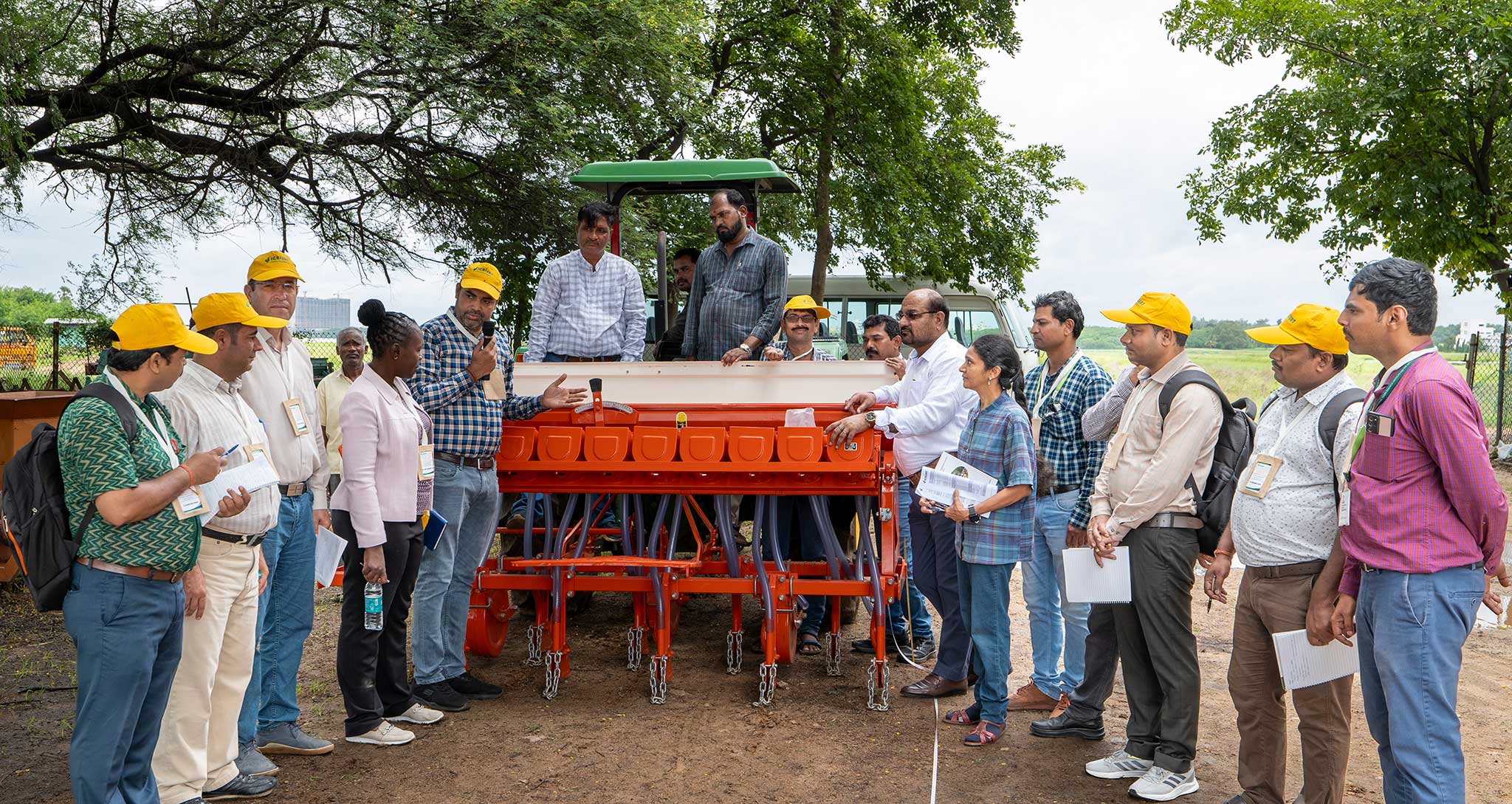
Wastewater reuse for irrigation. Scale-appropriate farm mechanization especially for smallholders
Community-based natural resource management
Scaling and adoption of proven agricultural solutions
Waste-to-wealth initiatives – biochar, aerobic composting, water hyacinth management
Protected cultivation and high-value crop production
Alternative livelihood options and agri-allied enterprises
Monitoring, evaluation, learning, and impact assessment
Capacity building and knowledge dissemination
How We Work:
Codesign and participatory approach
The cluster involve a participatory approach that embed community led processes to understand the local context and community needs and demand driven codesign frameworks that results in context based and demand driven and validated integrated landscape solutions.
Promotion through Integrated Farming Approach
The approach encourages integration of crops, trees, livestock, and natural resource management practices to create balanced and resilient farming systems that improve both ecological and economic outcomes.
Enhancing Livelihoods and Resilience
By combining productivity improvements with diversified income sources, the approach reduces vulnerability of farmers and enhances their resilience to climate and market shocks.
Improving Resource-Use Efficiency
Special emphasis is placed on optimizing the use of soil, water, nutrients, and biological inputs to minimize waste, reduce costs, and ensure sustainability.
Scaling Proven Technologies
The theme works to transform proven technologies and practices into integrated, landscape-level solutions that can be adopted at scale. Through strategic partnerships and evidence-based approaches, successful innovations are adapted and expanded to reach more farming communities.
Accelerating Innovation Adoption
We identify and promote emerging technologies and approaches with the potential to improve productivity, resilience, and sustainability. Collaborating closely with partners, we support testing, validation, and deployment across diverse farming systems.
Monitoring, Evaluation and Learning
Robust monitoring and evaluation systems help track outcomes, assess impact, and generate lessons that improve future interventions. This ensures that investments and innovations deliver measurable benefits for farmers, communities, and landscapes.
Capacity Strengthening and Partnerships
The theme collaborates with governments, research institutions, development organizations, private-sector partners, and farmer groups to build capacities, share knowledge, and support the long-term adoption of sustainable land management practices.
Impact Through the Regenerative Landscape
The Regenerative Landscape (RLS) theme serves as primary platform for translating research into scalable outcomes. Through large-scale partnerships and field implementation programs, RLS helps deliver integrated solutions that improve soil health, water security, agricultural productivity, climate resilience, and strengthen rural livelihoods.