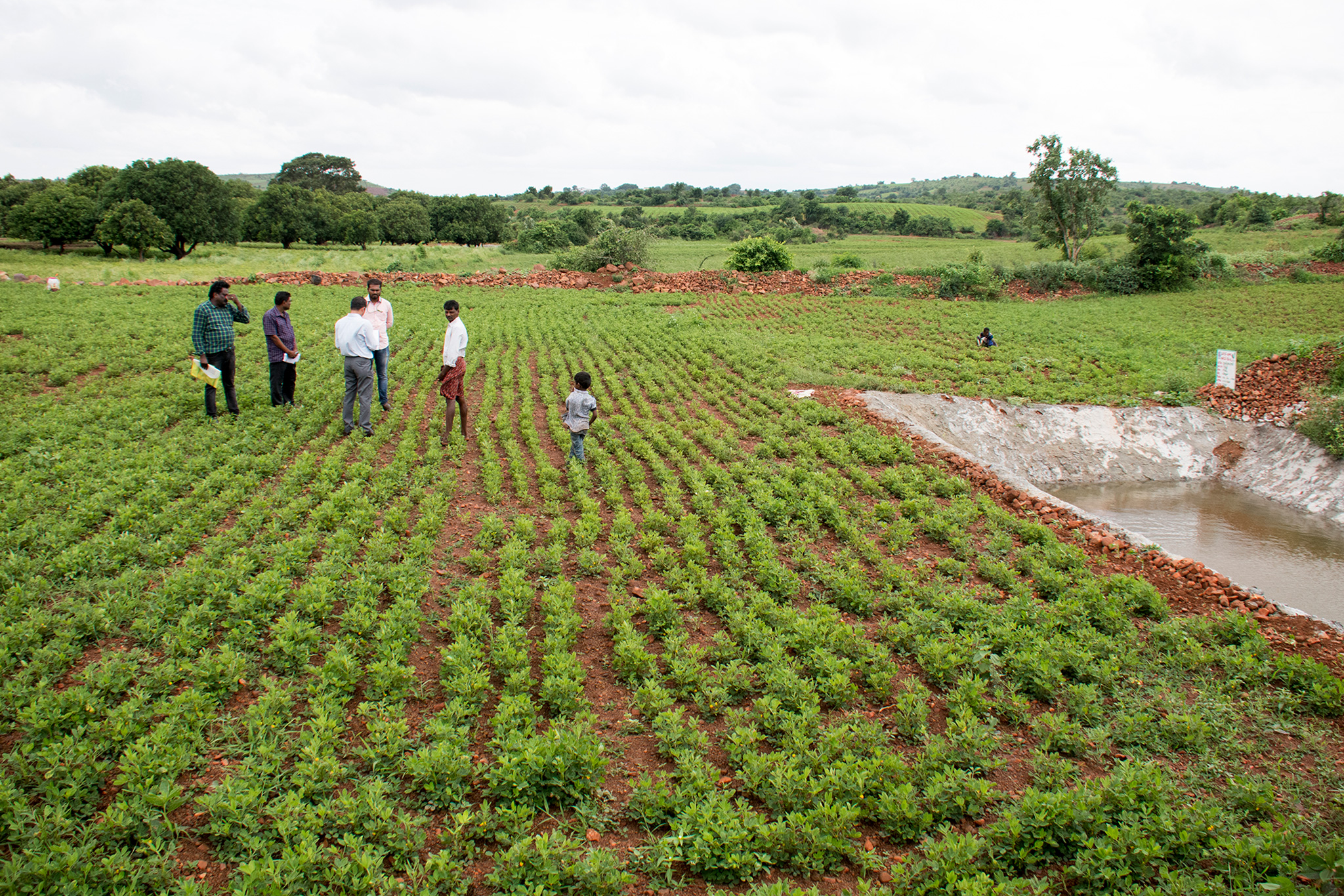

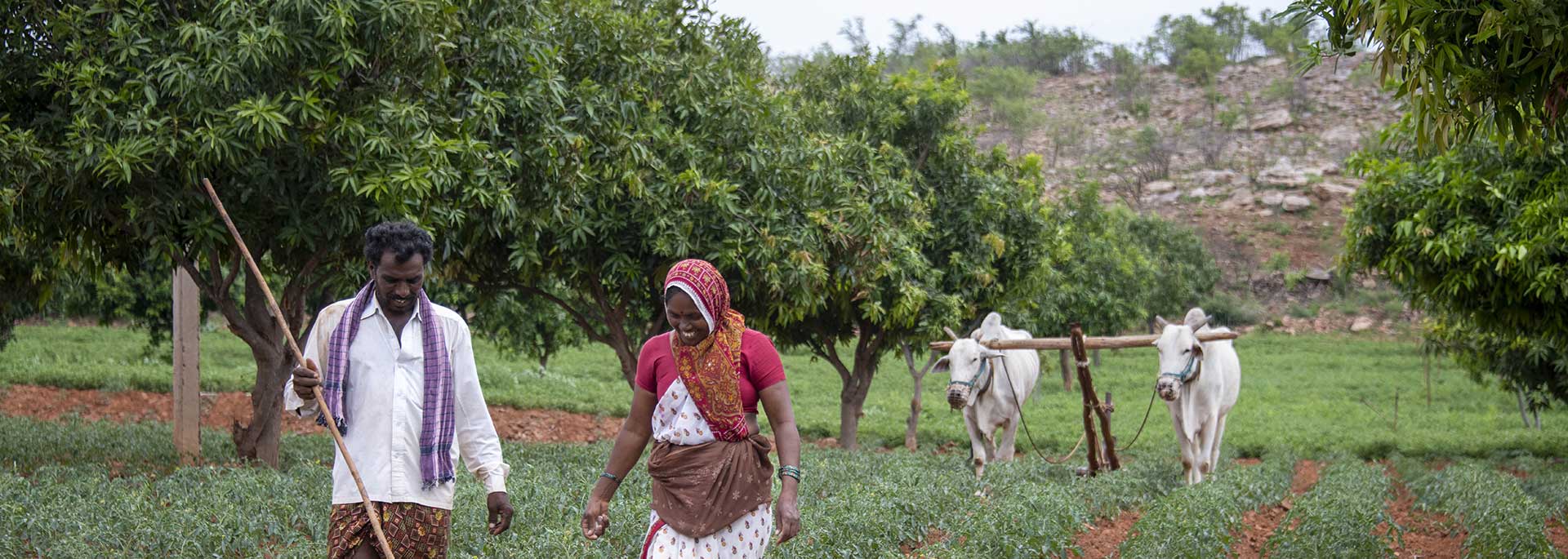
The Regenerative Landscapes Theme uses advanced tools, technologies and landscape-based approaches to restore natural resources, strengthen ecosystem resilience, improve agricultural productivity and support sustainable livelihoods across the drylands of Asia and Africa. State-of-the-art instrumentation, including automatic weather stations, soil moisture sensors, soil temperature probes, runoff and water-level monitoring devices, and telemetry-based data loggers, enables continuous monitoring of weather, climate variability and soil-water dynamics. ICRISAT’s agrometeorological observatory further supports long-term, quality-controlled climate data collection and provides a strong reference platform for agro-climatic research and landscape-scale decision support.
Landscape Resource Assessment and Conservation Planning
The RLS theme has developed extensive expertise in landscape resource assessment using tools such as Land Resource Inventory (LRI), hydrological analysis, and geospatial planning. These approaches support the identification of opportunities for land restoration, water conservation, and sustainable natural resource management. Through biophysical and socio-economic data, the theme helps design interventions that improve resource use efficiency and strengthen landscape resilience.
Water Budgeting and Climate-Resilient Cropping Systems
The theme applies water budgeting approaches to align cropping decisions with available water resources and changing climatic conditions. By combining field measurements, hydrological data, modelling tools, and landscape-scale assessments, researchers identify opportunities to improve water-use efficiency, optimize crop choices , and support sustainable agricultural intensification across dryland systems in Asia and Africa.
Soil Health Assessment and Management
Healthy soils are the foundation to regenerative agriculture and resilient dryland farming. The theme assesses soil physical, chemical, and biological properties to generate evidence-based recommendations for nutrient management, soil fertility improvement, carbon sequestration, and improved resource-use efficiency. These insights support farmers , extension systems, policymakers, and development partners in promoting sustainable land management practices.
Optimized and precision nutrient management
The Cluster developed an optimized nutrient management frameworks and tools that accounts the dynamics in climate, soil, topography and cropping systems using big data, machine learning and AI intelligence to generate farmer tailored site-specific fertilizer recommendations that address localized yield gaps.
Resilience Solutions for Enhancing Soil Health
The fertility status of smallholder subsistence farms has been depleted due to the loss of soil organic matter and nutrient reserves. This leads to nutrient imbalances, soil acidification, and reduced crop yields, impacting food security. The response of such soils to the application of nutrients is low, unless their fertility and soil health are restored through the adoption of an integrated soil-crop system for improved crop-nutrient response and yield. Addressing these issues and balancing tradeoffs requires a multifaceted approach, including robust soil health assessment frameworks, digital mapping techniques, and resilient soil management practices all together support a resilient soil, improve agronomic and economic gains, and generate healthy ecosystem services.
Flood risk management opportunities
The Cluster leverage on technologies like remote sensing and GIS-based multi-criteria analysis to map flood prone landscapes highly suitable for flood-based farming and other flood use opportunities. This analytical approach is complemented by the development of engineering structures like flood-spreading techniques to actively manage flood risks and convert them into agricultural opportunities, particularly in the dry lowlands.
Farmer Managed Natural Regeneration
Farmer Managed Natural Regeneration (FMNR) technology is a low-cost, farmer-driven land restoration method that involves systematically selecting and managing the regrowth of trees and shrubs from existing stumps, roots, or seeds, and intercropping with crops. This agroforestry practice restores soil structure and fertility, combats erosion, and enhances biodiversity while providing farmers with valuable resources like firewood and timber . Emphasizing a community-based approach, ICRISAT supports the scaling of FMNR through decision support tools for suitability assessment and participatory governance to ensure its sustainability and effectiveness, particularly in the drylands of the Sahel.
Conservation Agriculture
Promotion of zero-tillage and minimum tillage systems, especially in rabi rice-fallow areas to utilize residual soil moisture and nutrients effectively, thereby support better soil health and long-term sustainability of production systems.
Crop Diversification and Intensification
Promotion of diversified cropping systems involving legumes, millets, and oilseeds to reduce risks associated with climate variability and market fluctuations; while intensification through intercropping and sequential cropping to improve land productivity and farm incomes.
Scale-Appropriate Farm Mechanization
Introduction of location-specific, affordable mechanization options tailored for smallholder farmers, especially for millets and field crops. These include seed drills, planters, weeders, and small harvesters that improve timeliness and efficiency of operations. Mechanization reduces drudgery, addresses labor shortages, and enhances productivity while ensuring precision in crop management practices.
Climate-Resilient Agricultural Technologies
Adoption of improved and stress-tolerant seed varieties adapted to drought, heat, and other climatic stresses. Implementation of soil test-based fertilizer (STBF) application, Integrated Nutrient and Pest Management (IPM) to minimize the dependence on chemical fertilizers.
Ecosystem Services Assessment and Monitoring
The theme employs advanced monitoring systems, hydrological instrumentation, remote sensing technologies, and modelling tools to assess ecosystem services generated through landscape restoration and conservation efforts. This evidence helps quantify benefits such as improved water availability, soil health, carbon sequestration, biodiversity support and livelihood resilience enabling informed decision making for landscape planning, policy and investment.
Circular Economy and Organic Resource Management
Regenerative landscapes depend on the effective recycling of organic resources. The theme promotes composting, biochar production, and organic soil amendments to improve soil health, enhance soil organic carbon, reduce agricultural waste, and support rural enterprise development. These approaches help transform farm residues and organic waste into valuable resources for farming communities.
Water Reuse and Nature-Based Treatment Systems
To address growing water scarcity, the theme promotes sustainable wastewater treatment and reuse through constructed wetlands and other nature-based treatment systems. These approaches enhance water availability for agriculture, reduce environmental pollution and support more resilient farming systems.
Protected Cultivation and High-Value Cropping Systems
The theme supports diversified and climate-resilient farming through protected cultivation, vegetable grafting, and intensive horticultural production. These technologies help farmers improve productivity and pest related stresses, and increase income from high-value crops.
Livelihood Diversification and Agri-Allied Enterprises
Resilient landscapes are closely linked to resilient communities. The theme promotes agri-allied enterprises and value-added livelihood opportunities to strengthen and diversify rural incomes. Through the Regenerative Landscape Theme, training and capacity-building programs support activities such as mushroom cultivation, beekeeping, solar drying, hi-tech nurseries for vegetables and other crops, water hyacinth-made handicrafts for increasing value addition, dwarf banana and ornamental nurseries for additional income and other rural enterprises that enhance livelihood resilience.
Through the application of these tools and approaches, the Regenerative Landscapes Theme, supports the restoration and sustainable management of agricultural landscapes by developing practical solutions that improve farming systems resilience, productivity and long-term environmental sustainability.